On October 24, 1944, during the Battle of the Sibuyan Sea, the Yamato's sister ship, the Musashi, met its end in a grueling aerial assault. The destruction of this 72,000-ton leviathan remains a critical forensic case study in naval history, demonstrating both the extreme resilience of the Yamato-class architecture and the absolute lethality of coordinated carrier-based air power.
THE SIBUYAN SEA AMBUSH: A GRUELING DECOMPOSITION

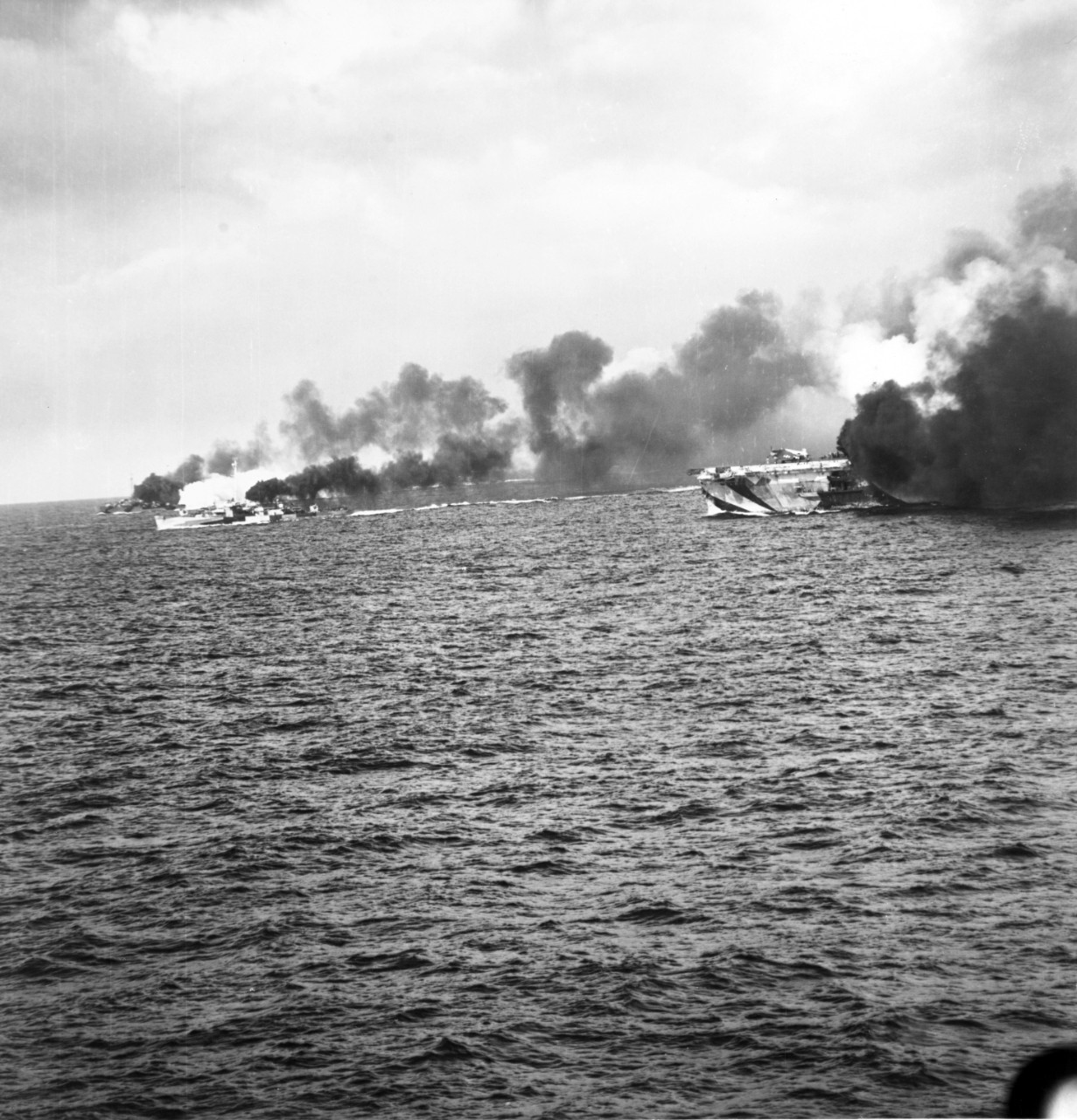
As the IJN Center Force transited the Sibuyan Sea toward Leyte Gulf, they were intercepted by five waves of aircraft from Admiral William Halsey’s Third Fleet. The Musashi became the primary target of the American aviators, who utilized a clinical pincer attack strategy to split the ship's anti-aircraft fire and prevent effective maneuvering. Over the course of six hours, the ship was systematically dismantled by an unprecedented 19 torpedo strikes and 17 direct bomb hits.
Despite this massive attrition, the Musashi remained a stable gun platform for hours, even firing its 18.1-inch main batteries in a desperate anti-aircraft role using San-shiki "beehive" shells. However, the concentrated torpedo impacts on the port side eventually overwhelmed the damage control systems, leading to a terminal list. The vessel capsized and sank at 19:36, taking 1,023 sailors—and the myth of the unsinkable battleship—with it.
TACTICAL FORENSICS AND THE WRECK
The forensic discovery of the wreck in 2015 by Paul Allen's expedition confirmed the horrific internal damage described in survivor accounts. The ROV footage showed the bow DIGGING into the seabed, reflecting the final moments where the ship "ploughed" through the water with its forward compartments flooded. Forensic analysis indicates that the longitudinal bulkhead—intended to isolate flooding—actually contributed to the rapid capsizing by allowing asymmetric water weight to accumulate faster than it could be corrected.
THE HYPOTHETICAL: WHAT IF MUSASHI SURVIVED?
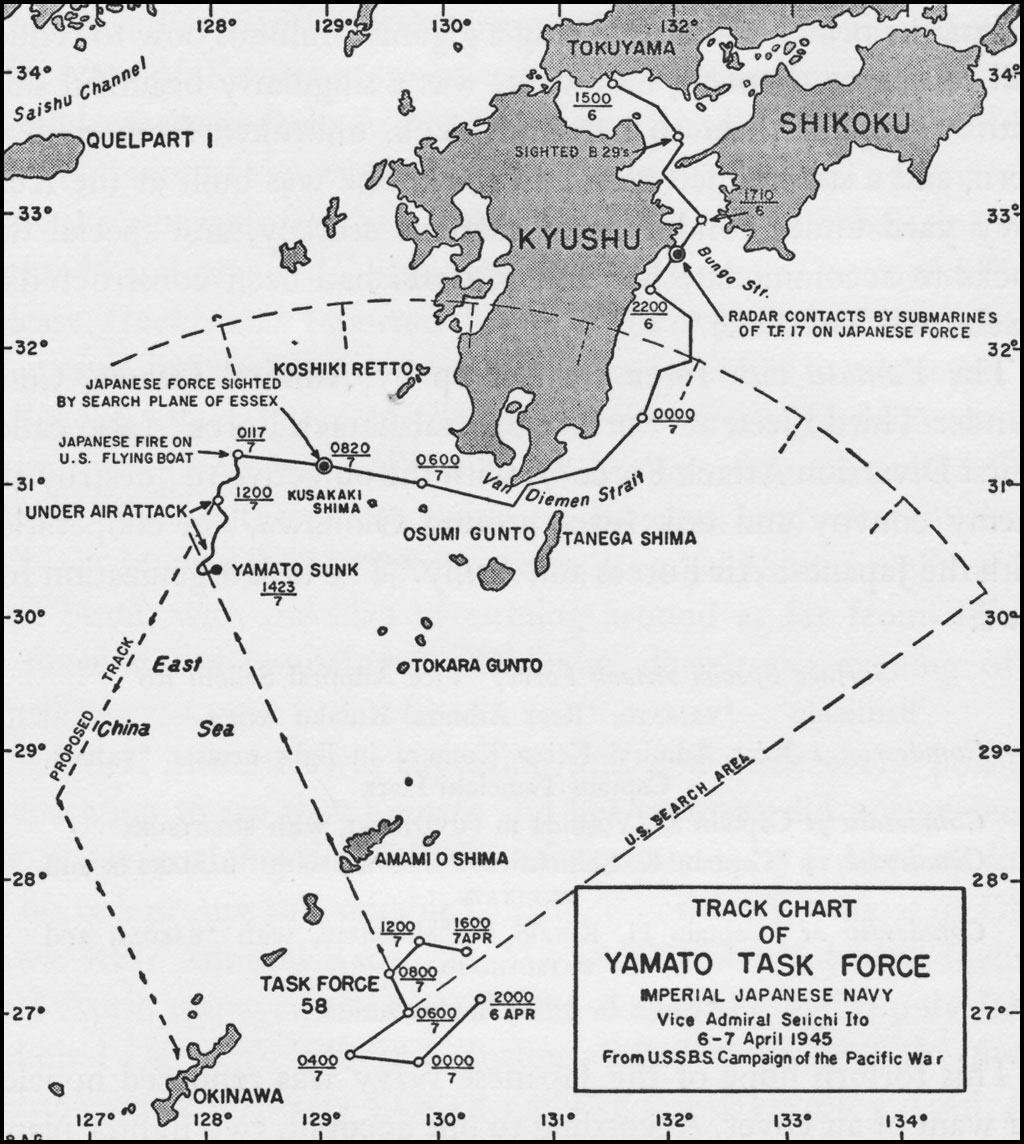
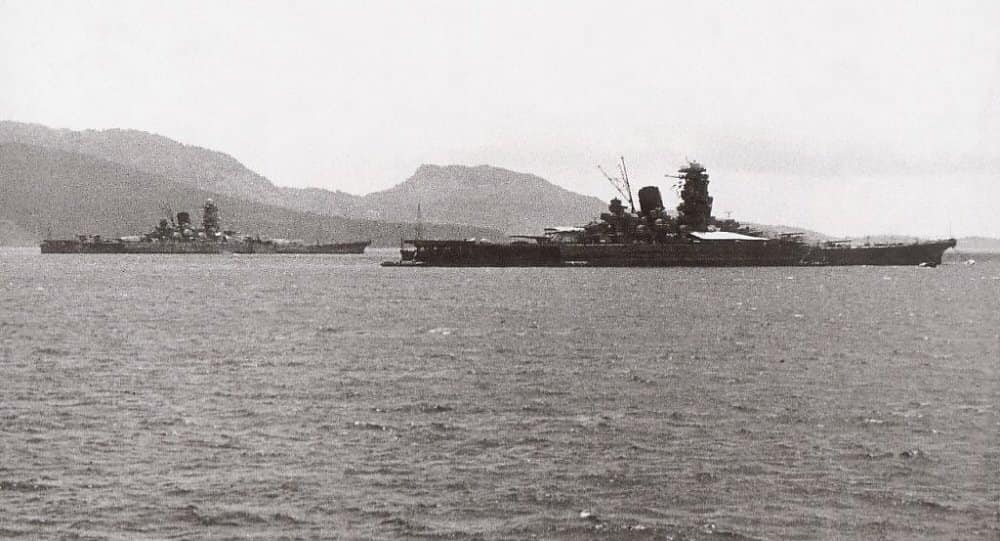
One of the most enduring debates in naval history is the "Musashi Paradox": the strategic impact if the sister ship had survived Leyte Gulf to join the Yamato in 1945. In this hypothetical "Dual Fortress" scenario, the presence of both leviathans at the Kure Naval Arsenal would have doubled the defensive complexity for US Task Force 58. Their combined anti-aircraft screens would have totaled over 300 barrels, creating an incredibly dense "wall of steel" against aerial incursions.
However, modern historians conclude that even a dual-ship defense would have ultimately failed against the sheer volume of Allied air power and advanced information warfare. The Musashi's survival would have likely ended in a similar literal disintegration, as the era of the "Big Gun" had already been checkmated by the carrier's reach.